
Hey, Arizona!
Remember when Cochise County sent a letter last year to Pam Bondi, asking her to investigate whether the laboratories charged with testing voting machines nationwide were properly accredited ahead of recent elections?
And, later, when it forwarded an identical memo to Tulsi Gabbard?
Well, neither of them ever responded before leaving their respective posts. So, some county leaders want to try again.
Supervisors Tom Crosby and Frank Antenori asked staffers at a meeting last week to put together new letters to U.S. Attorney General Todd Blanche, White House Deputy Chief of Staff Stephen Miller, and Tim Courchaine, the state’s top federal prosecutor. (Supervisor Kathleen Gomez, the third member of the all-GOP board, was absent.)
They hope to get answers to their questions around the proper interpretation of federal and state laws pertaining to the county’s tabulators — the same questions that prompted two of the county’s supervisors, including Crosby, to vote to delay the certification of its election results past the legal deadline in November 2022.
A judge ultimately ordered the supervisors to certify the midterm election results, but their doubts about the laboratories — and the voting machines they test — have persisted. Crosby and Antenori said the issue has become even more pressing in light of President Donald Trump’s move to fire the members of a federal election agency tasked with overseeing the testing and certification of voting systems, among other functions.
The county’s staff noted that the agency can still certify election equipment to the standards its commissioners had previously adopted, even in the absence of a quorum.
But supervisors weren’t convinced. Crosby said the matter needed to be “parsed out” and perhaps go to court. He and Antenori plan to send out their letters next week, with hopes of hearing back before November.
Speaking of Crosby, you might also be wondering about the status of the state’s criminal case against him. He still faces felony-level election interference charges following his vote to delay the county’s canvass in 2022 — but his prosecution is facing headwinds.
His trial has been repeatedly delayed — most recently because an internal probe raised questions about the integrity of a lead investigator for the prosecution. It now looks slated for early 2027. But that falls after the victor in the state’s contentious attorney general race is slated to take office, meaning his trial may hinge on the outcome of the contest.
Incumbent Kris Mayes, a Democrat, initially brought the charges against Crosby. If she remains in her seat, the case will continue forward. But Republican Warren Petersen, her opponent, has long said he’d drop the charges if he became the state’s top prosecutor.
That’s it for this week — but before I log off, can I ask a favor? My colleagues and I are hosting an event on Sept. 15 to answer all of your election questions heading into midterms season. So, do me a solid and join us? You can RSVP here and more details are below.
I’ll be back in your inbox soon. Tell a friend to sign up here so they don’t miss out, and let me know what I should look into next. You can reach me anytime at [email protected].
Votebeat's reporters watch and report on vote counting and other key election processes. Help keep them in the room by donating today.

You’re invited: Will the midterms happen? Your election questions, answered | Part 2
Will the 2026 midterms happen? Short answer: Yes.
Long answer: Elections happen because thousands of local officials follow state and local laws requiring them to happen — and history shows they’ve done so before, even under immense pressure. The greater danger isn’t no election, but one that’s chaotic, unfairly challenged, or deliberately cast as illegitimate after the fact.
Got more questions about the midterms? Submit them to Votebeat reporters with your RSVP, and they’ll give you the long answer live on Sept. 15 at 1 p.m. EDT.
On the Lighter Side
Democrat Adrian Fontes and Republican Alex Kolodin represent opposite sides of the political spectrum. But outside of their campaigns for secretary of state, they may have some non-political common ground.
Both men are lawyers. Both are fathers. And before they entered political life, recent reports suggest both of them really liked to party.
In 1989, Fontes led ASU cops on a late-night, drunken chase around the school’s campus in Tempe, according to the Phoenix New Times.
Fontes — who was 19 years old, a student, and apparently wasted at the time — tumbled off his red motorcycle after a 1.7-mile pursuit through some of the university’s iconic locations. The resulting police report noted that more than a dozen pedestrians were forced to jump out of the way as he tore through the campus.
Fontes was charged with two felonies, and ultimately pleaded guilty to a misdemeanor charge of resisting arrest. He chalked the incident up to “some teenage decisions” and said he’s since matured.
Years later, Kolodin would have his own incident. In 2020, before being elected to the state legislature, he was pulled over and placed in handcuffs by police in Scottsdale, according to body camera footage and a police report obtained by Arizona’s Family.
The officers had initiated the stop after spotting a vehicle with no visible license plates. But, while following it, they also saw a passenger throw an “unidentifiable shiny object” out of the window.
Kolodin insisted he had only thrown ice out of the window. But officers located a can of Smirnoff Spiked Sparkling Raspberry Rosé near the scene.
They ultimately poured out the remaining contents of the can, gave Kolodin a warning, and issued him a ticket for criminal littering. Kolodin maintains it was only ice.
Bad boys, bad boys, whatcha gonna do… 🚨
Our Latest Stories

Thousands of Arizona voters received letters asking if they’d moved. Here’s why.

USPS whistleblower alleges rushed mail ballot systems could disenfranchise voters
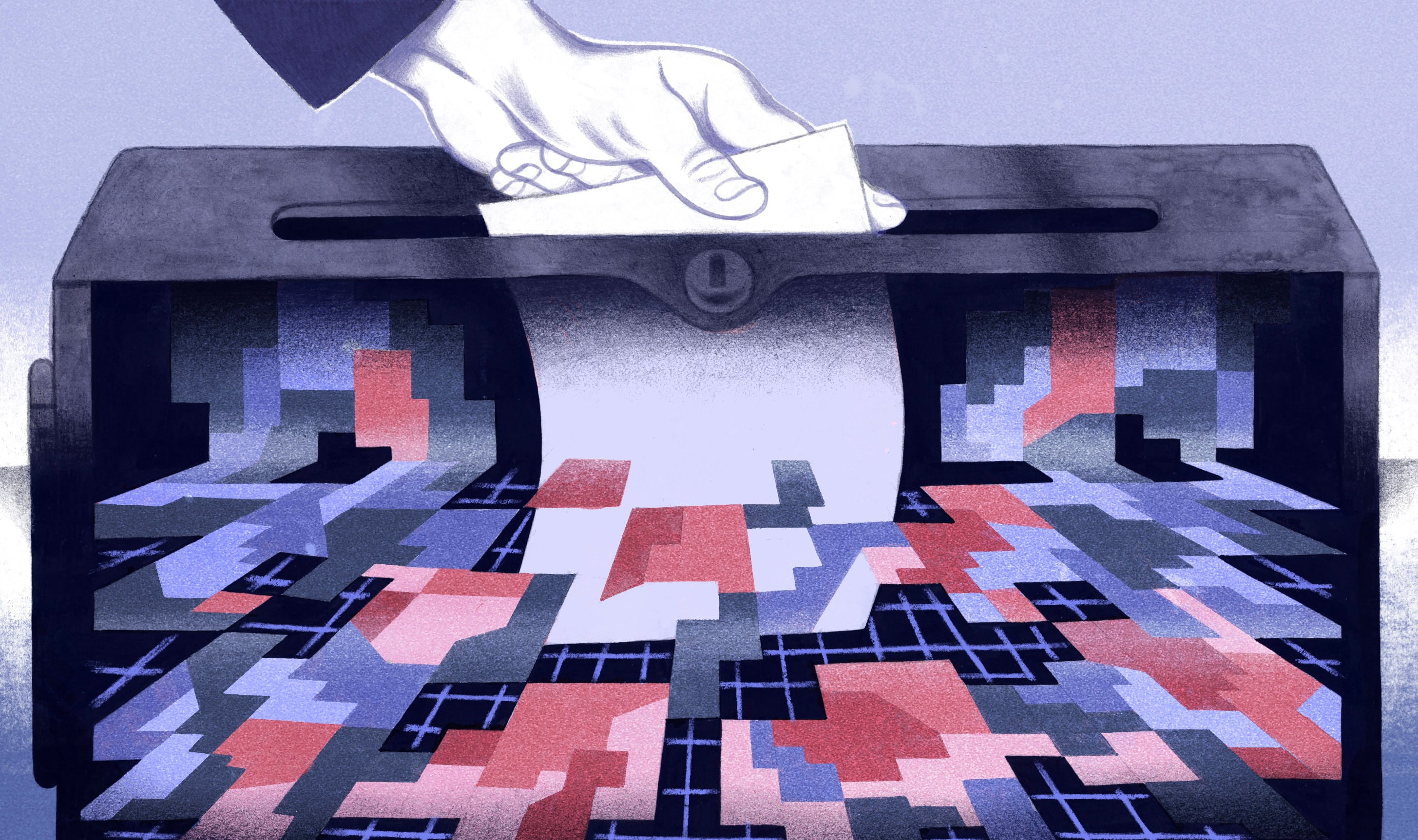
His model was built to detect voter fraud. Now it’s testing the limits of election trust.
In Other Voting News
Podcast: Secretary of state rivals spar over mail ballots, election integrity, Arizona Republic (Paywall)
9th Circuit sides with states in Kalshi gambling fight, potentially reviving Arizona’s prosecution, Arizona Mirror
Judge orders AZ attorney general to cover costs for Navajo County recorder after failed litigation, KJZZ
Crosby wants transcripts unsealed related to 2020 candidate, My Herald Review (Paywall)
A town council turns to a deck of cards to break a tie, New York Times (Paywall)
Looking for your next read? Check out these other great newsletters.

